Fueling the Athlete: The PGF Nutrition Protocol
“Food is the secret to structural longevity and field performance”
Feeding your puppy is about more than just filling a bowl; it is about fueling the growth of a high-performance athlete. Because our Golden Retrievers are bred for field work and active lifestyles, their nutritional needs are specific.
Below is the PGF Guide to Feeding and Body Condition, designed to help your puppy grow slowly and steadily for a long, healthy life.

Feeding Frequency & The "PGF Routine"
How often you feed is just as important as what you feed.Pro-Tips for Mealtime
"Float" the Food: We personally add water to all of our dogs' meals. This ensures they stay hydrated and prevents them from gulping down water too quickly after eating.
The 15-Minute Rule: Put the food down for 15 minutes. If they don't eat, pick it up and offer it again at the next scheduled meal. This teaches them to focus on their food rather than becoming "grazers."
The Hand-Feeding Bond: We highly suggest feeding at least one meal by hand as a training session. It takes 10–15 minutes and is the best way to build a respectful relationship while working on basic commands.
Peace While Eating: While we want our dogs to be comfortable with us near their bowls, let them eat in peace. Do not take food away as a punishment or constantly stick your hands in their dish. To build a positive association, simply drop a high-value treat into their bowl while they eat.
The Nutritional Foundation
Growing puppies need a diet specifically formulated for their development. We recommend a high-quality Puppy Food or a premium All Life Stages formula. Feeding a low-quality food or moving to adult food too early can rob your puppy of the nutrients they need for proper bone and joint development.
Stick to the Plan: Once you choose a formula, stay with it. Sudden changes can lead to digestive upset.
Safe "Toppers": If you want to add variety, small portions of fresh vegetables (carrots, broccoli, green beans, pumpkin, zucchini) or fruits (apples, bananas, blueberries, watermelon) are excellent low-calorie snacks.
Hydration & Hygiene: Fresh water should always be available. We recommend washing water bowls daily to prevent the buildup of bacteria and biofilm.
| Age | Frequency | PGF Tip |
|---|---|---|
| 8 Weeks – 12 Months | 2–4 meals per day | Divide the total daily amount into several smaller sittings. |
| 12 - 18 Months | 2-3 meals per day | Continue dividing totally daily quantity into multiple smaller meals. |
| 18 Months and Beyond | 1-2 meals per day | Most adults do well with twice-daily feeding, though some research suggests once-daily can benefit metabolic health. |
⚠️ Critical Safety Note: Bloat and GDV
To prevent Gastric Dilation-Volvulus (GDV)—a life-threatening condition where the stomach twists—never exercise, run, or engage in rough play with your dog for at least one hour before and one hour after a meal. This "rest period" is essential for safe digestion.
Body Condition: "Watch the Dog, Not the Dish"
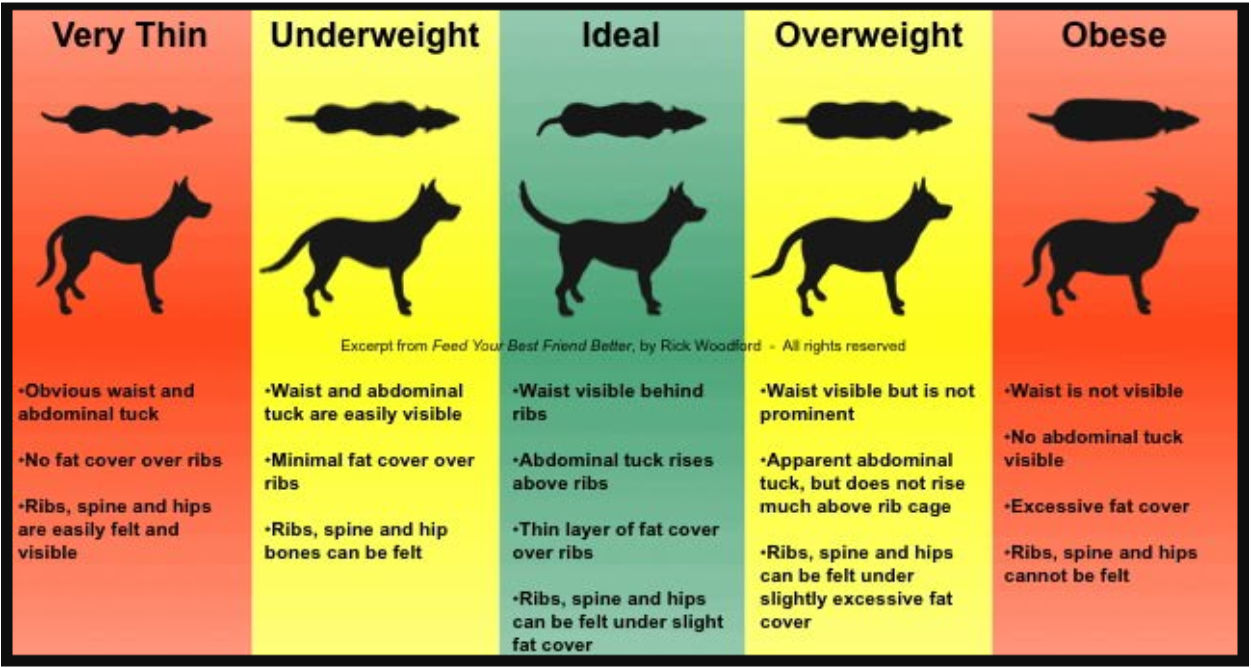
There is no "perfect" weight on a scale because every Golden is built differently. Instead, we use a Body Condition Score (BCS).
The Rib Test: You should be able to easily feel your dog’s ribs under a thin layer of skin, but they shouldn't be sticking out. If you have to "dig" to find the ribs, your dog is carrying too much weight.
The "Tuck": Looking from above, your dog should have a visible waistline. From the side, their chest should be deeper than their stomach (an abdominal tuck).
Adjusting Portions: If your dog feels a bit heavy, reduce their daily portion. If they feel too lean, increase it slightly. Keeping a field Golden lean is the kindest thing you can do for their joints.
DO NOT FOLLOW THE LABEL!! Dog food bags have charts of recommended feeding quantities. In our experience, the estimation of quantity to feed has never been right! Watch the dog! Adjust feeding quantity as needed based on the chart below. Don’t worry you’re not following a specific feeding chart!
Visual Guide to Body Condition
The "Begging Scam"
Your puppy will eventually try to convince you that they are starving to death. They have spent thousands of years perfecting the "pathetic gaze" to exploit human affection for food.
Don’t be fooled. Begging is an evolutionary survival strategy, not a sign of hunger.
No Table Scraps: Human food (especially fried or seasoned items) can lead to obesity and digestive toxicity. Some human food such as chocolate, onions, chives and grapes are toxic to dogs, so it is best to not give any human food. As always there are exceptions. For some reason our dogs go nuts over broccoli… and cheese. BUT ALWAYS, ALWAYS in moderation!
Training Rewards: Use their regular kibble or tiny, low-calorie treats for training. If you use a lot of treats during the day, remember to reduce their dinner portion accordingly!
How to Transition Food
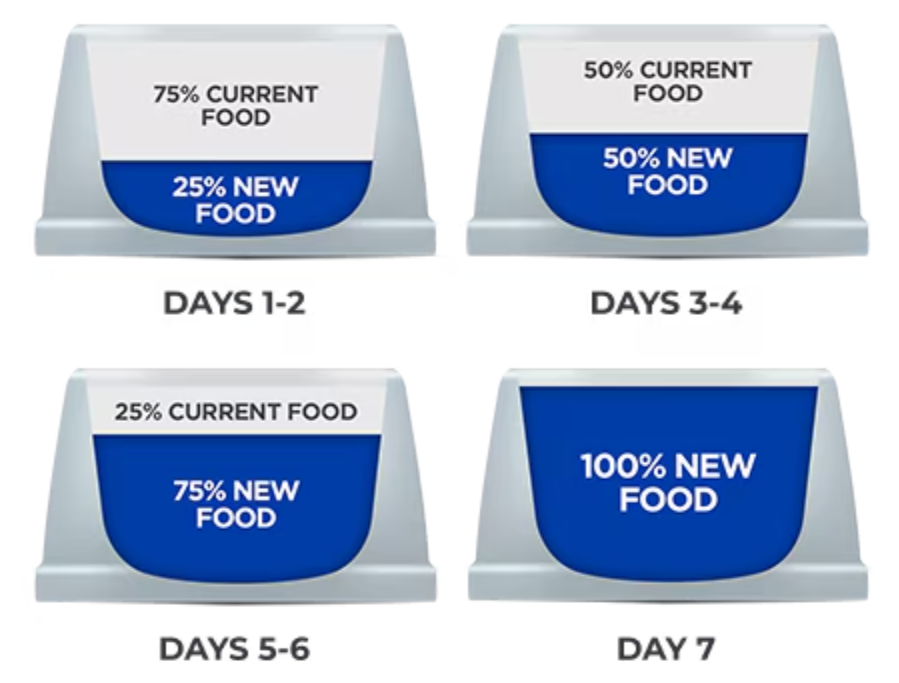
If you must switch brands, do it slowly over 7–10 days to avoid the "puppy diarrhea" that comes with sudden dietary changes.
Days 1–2: 25% New Food / 75% Old Food
Days 3-4: 50% New Food / 50% Old Food
Days 5-6: 75% New Food / 25% Old Food
Day 7: 100% New Food
PGF Tip: Adding a spoonful of plain canned pumpkin (not pie filling!) and a probiotic during the transition can help keep their digestion stable.