
The Gift of the Den: Mastering the Crate
“How our early introduction transforms a “box” into a lifetime of safety and security”
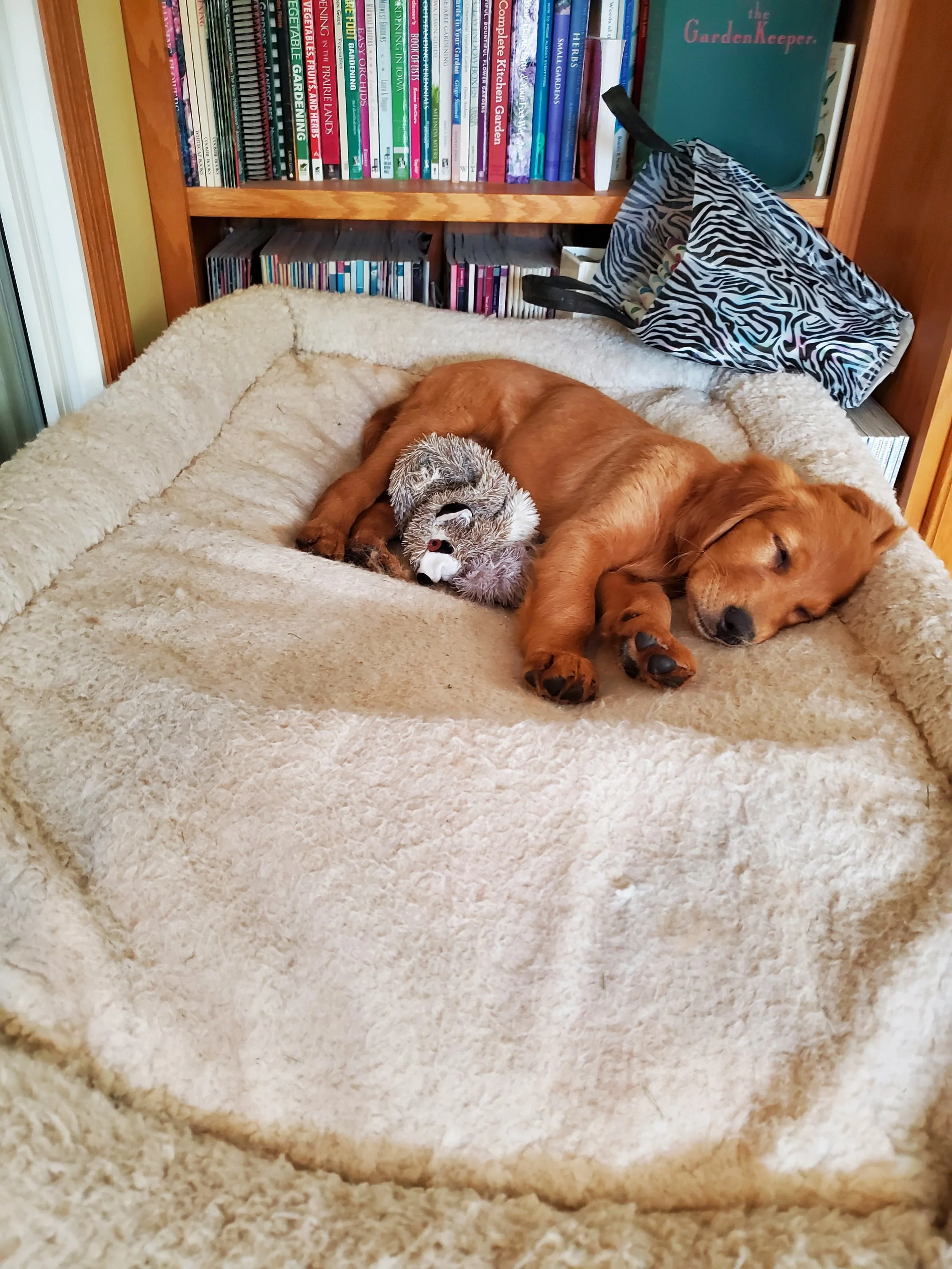
Crate training is one of the most valuable gifts you can give your dog. At Pine Grove Farm, we believe in it so strongly that we begin the process for you. Our introduction starts around 5 weeks of age, when we place a crate directly into the puppy play area with the door removed or secured open. This allows the puppies to explore, play, and naturally choose the crate as a "den" for their naps.
By the time we transition to short, positive crating periods in late week 6 and into week 7, the environment is already familiar and safe. This head start helps ease the transition to your home and prevents the "first-night panic" many puppies experience.
Here is the PGF guide to successful crate training.
Equipment: The Right Setup
The 42" Wire Crate: For a fast-growing Golden, we recommend a 42-inch wire crate with a divider panel. This allows you to adjust the size so it grows with your puppy.
The Goldilocks Rule: The space should be just large enough for the puppy to stand up, turn around, and lie down. If it’s too big, they will use one corner as a bathroom and the other as a bed.
Location: We recommend keeping the crate in your bedroom at first. This provides comfort through your scent and proximity, and allows you to hear if they need a middle-of-the-night potty break.
Why Crate Train? It’s Not Just a Box
Many owners feel guilty about crating, but research shows that consistent structure actually lowers cortisol levels (stress) in puppies.
Potty Training Mastery: Dogs have a natural instinct to keep their sleeping area clean. The crate utilizes this instinct to help them develop bladder and bowel control.
Safety First: Puppies are "land sharks." Crating prevents them from chewing electrical cords, swallowing foreign objects, or destroying your home when you can't supervise them.
Preventing Separation Anxiety: Golden Retrievers are "velcro dogs." By giving them a designated space to be alone, you teach them independence, preventing the panic and destruction often associated with separation anxiety.
Emergency Preparedness: Whether it’s a vet stay, a grooming appointment, or a flight, your dog will eventually need to be crated. Training them now makes those future events stress-free rather than traumatic.
Enforced Naps: Just like toddlers, puppies get "cranky" when overtired. A crate provides a quiet place for them to settle and get the 18–20 hours of sleep their developing brains require.

The PGF "Success Routine"
Since we’ve already introduced the concept by week 7, your goal is to maintain the momentum.
Positive Association: Never use the crate as punishment. Give a treat (and use the command "Kennel!") every single time they go in.
The "Cry It Out" Phase: It is normal for a puppy to protest for 15–20 minutes at first. If you know they have pottied and are safe, stay strong. Letting them out while they are screaming teaches them that "screaming = freedom."
Nighttime Protocol: * Stop water/food 2 hours before bed.
Potty right before crating.
If they wake up crying at 2:00 AM, take them out on a leash, let them potty, and put them straight back in. No play, no lights, no excitement. This is a business trip, not a social hour.
The "Blackout" Trick: Many puppies settle faster if you drape a blanket or towel over the crate to create a dark, den-like environment.
When Can I Stop?
There is no "magic age" to stop crating. For many of our adult dogs, the crate remains their favorite nap spot and is a "safe haven" they choose to enter. We view freedom in the house as an earned right that comes with maturity (usually around 1.5 to 2 years old). Until you can 100% trust their bladder and their teeth, the crate is the safest place for them to be.