Potty Training: The PGF Head Start
“We Do the Groundwork, YOU Keep the Momentum!”
At Pine Grove Farm, we believe potty training is about prevention, not punishment. Puppies aren't born knowing that our homes aren't bathrooms—it is our job to teach them. Our method focuses on making it easy for the puppy to do the right thing from day one.
Your Role: Consistency & Routine
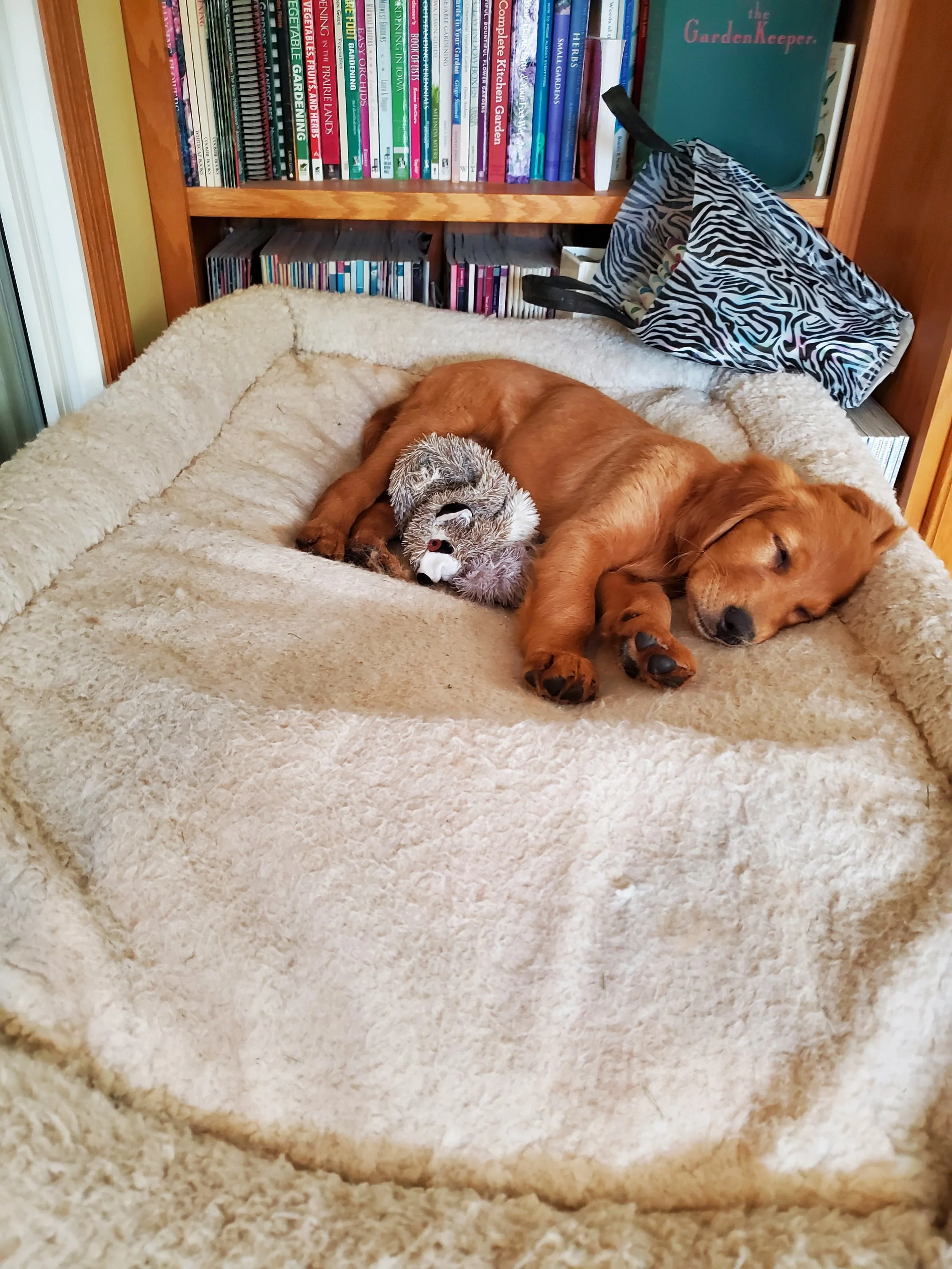
When your puppy moves into your home, they are in a brand-new environment with a new routine. Even though they have a head start, they need you to be patient and consistent.
The "Assume They Have To Go" Rule: Don't wait for your puppy to tell you they have to go. Take them out immediately:
As soon as they wake up (morning or after a nap).
Within 30 minutes after eating or drinking.
After a vigorous play session.
Every 2–3 hours during the day (and night, initially).
Key Strategies for Success
Crate Training is Essential: If you cannot have eyes on your puppy, they should be in their crate. This prevents "stealth" accidents and utilizes their natural instinct to keep their sleeping area clean.
Watch for the Cues: Excessive sniffing, circling, restlessness, or sudden changes in activity are all "potty signals." When in doubt, take them out!
Reward the Right Choice: When they go outside, use a command like "Go Potty" and follow it with a party—praise, pets, and excitement!
Manage Intake: We recommend scheduled feedings (3 times a day for 18 - 24 months, then 2 times a day) rather than free-feeding. Pick up water bowls 2 hours before bedtime to help them successfully hold it through the night.
The Foundation We Build (Weeks 3–8)
The potty training process begins long before you pick up your puppy.
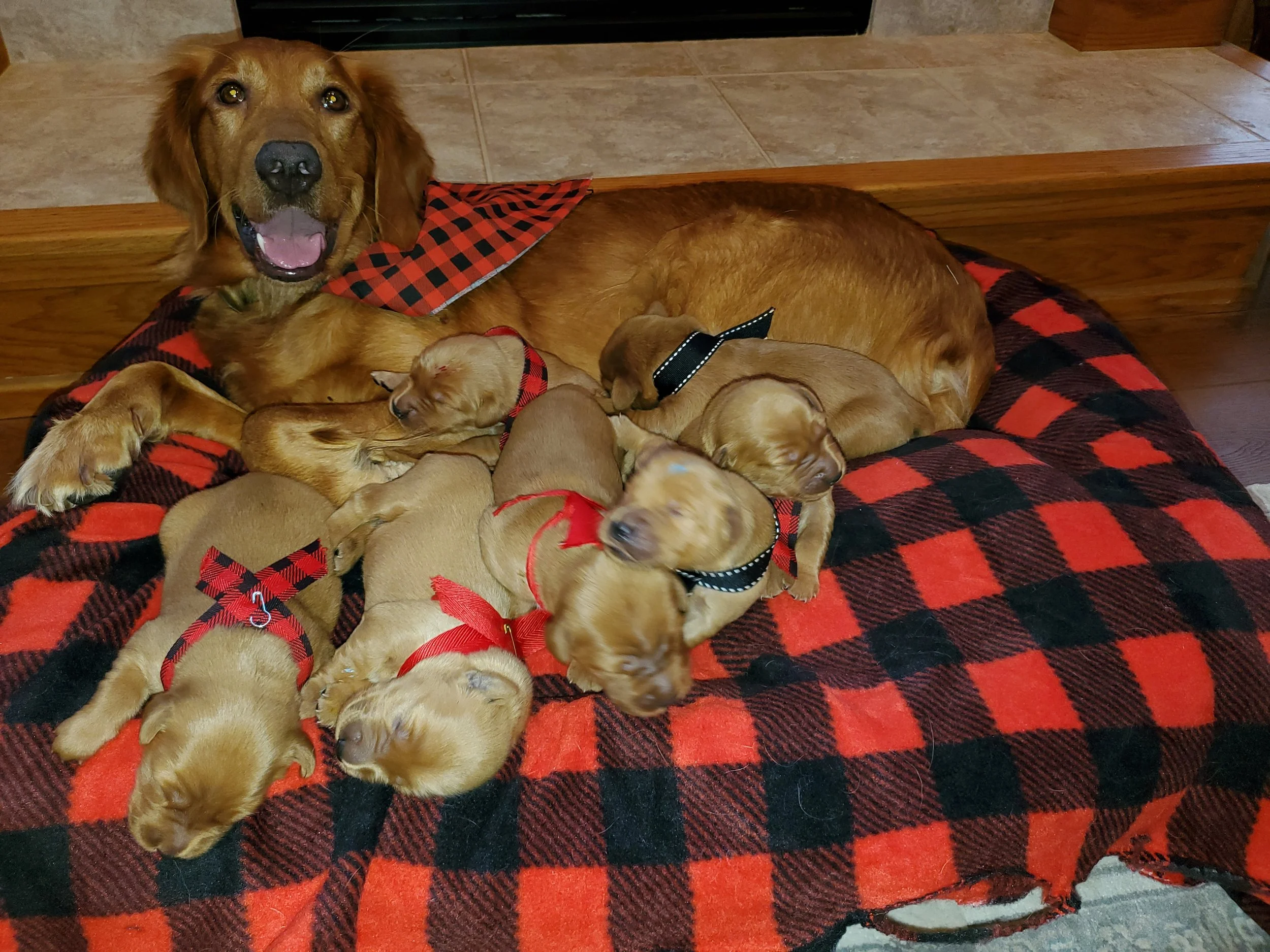
Litter Box Training (Week 3): As soon as the puppies are mobile, we introduce litter boxes in the whelping area. This teaches them at a very young age to distinguish between their "den" (where they sleep and play) and their "bathroom."
The Transition to Grass (Weeks 5–6): Once the puppies are sturdy enough, we begin the hands-on process of outdoor training. Every 2 to 3 hours, we physically take the entire litter outside onto real grass - weather permitting of course!! We’re in Iowa after all!
The Result: By the time your puppy is 8 weeks old, they have already spent weeks associating the feel of grass and the "great outdoors" with potty time. This manual, high-repetition training is why many PGF families find that their puppies are already mentally "primed" for outdoor success the moment they arrive home.
How to Handle Accidents
Accidents happen—and they are almost always a human error, not a puppy error.
Caught in the Act: If you catch them mid-stream, give a loud "NO" or "Oop!" to startle them, scoop them up immediately, and finish the job outside - DO NOT “PUNISH” THEM IN ANY WAY!!
The "After the Fact" Discovery: If you find an old accident, do not punish the puppy. They are not capable of connecting your current anger with a past act. Rubbing their nose in it or yelling only creates a dog that is afraid of you, not a dog that is potty trained.
Clean Like a Pro: Puppies are attracted back to the scent of previous accidents. Use an enzymatic cleaner (not ammonia-based) to completely break down the odors.
A Note on Health
Lapses in potty training can sometimes be health-related. Urinary Tract Infections (UTIs) are common in young female puppies and can cause frequent, small accidents. If your puppy is suddenly struggling despite a perfect routine, a quick vet check is always a good idea.